
For decades, manufacturers have relied on manual assembly and production methods that seemed impossible to automate. These processes often depend on human touch, experience, and intuition. They are passed down through generations, perfected by craftsmen who can sense quality in ways that machines traditionally could not. But the manufacturing landscape has changed. Workforce shortages, increasing product complexity, and rising demands for consistency and output are pushing companies to think differently. The truth is that many of these long-standing manual processes can now be automated successfully when the right engineering expertise and development approach are applied.
At Re:Build DAPR, we specialize in helping manufacturers make this leap. Our mission is to transform the phrase “it has always been done by hand” into “it is now done more efficient with automation.”
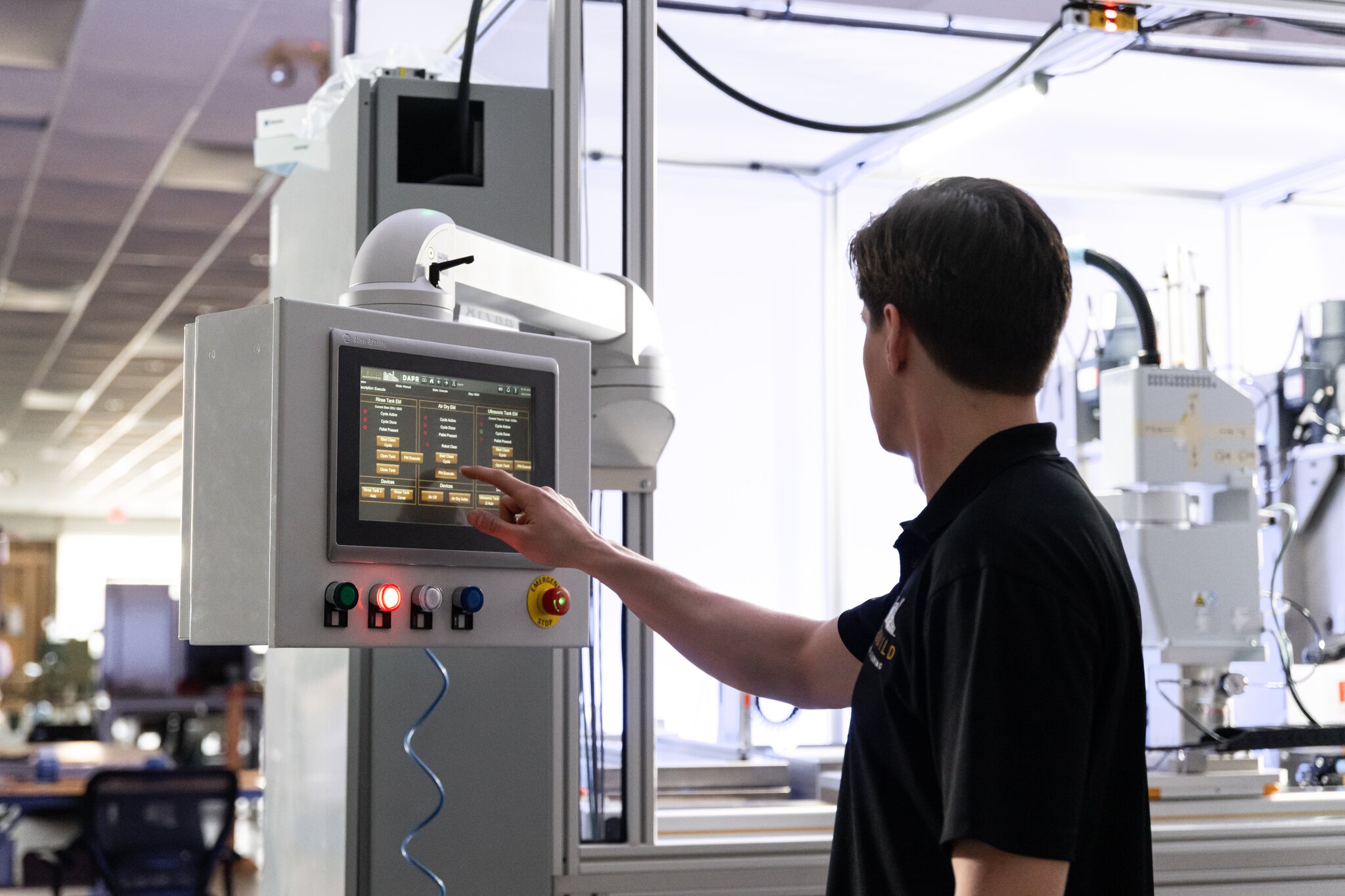
Manual processes have served the manufacturing world well for more than a century, but today they often limit how fast, flexible, and scalable a business can be.
In many facilities, the most experienced operators are nearing retirement, and the next generation entering the workforce does not have the same exposure to hands-on precision work. Training programs cannot always capture the instincts that seasoned operators develop over decades. The result is a growing skills gap that makes it harder to maintain quality and consistency at scale.
Meanwhile, customer expectations have never been higher. Markets demand shorter lead times, tighter tolerances, and absolute reliability. Manual manufacturing can deliver exceptional craftsmanship, but it struggles to provide the repeatability that high-mix, high-demand environments require.
Even so, many companies hesitate to automate. They worry that their process is too complex, too delicate, or too specific to replicate with a machine. They assume that automation will compromise their quality or erase the craftsmanship that defines their products. In reality, these are the very processes where automation can provide the most value.
With modern sensing, control, and motion technologies, automation is no longer limited to simple, repetitive tasks. It can now replicate human dexterity, decision-making, and sensitivity to detail. The key is partnering with engineers who know how to translate the art of manual work into the science of precision automation.
At Re:Build DAPR, we help manufacturers tackle the automation challenges that others avoid. Our team works on projects where the process has never been automated before, or where previous attempts have failed because the problem was too complex for conventional approaches.
Re:Build DAPR brings together mechanical, electrical, controls, and software engineering under one roof, which allows us to view problems as complete systems rather than isolated tasks. Our software engineering team plays a critical role in this approach. They build the logic, sequencing, sensing, and real-time decision making that allow automation systems to behave intelligently. Whether it involves thread alignment, torque detection, or recipe management, software is what connects every subsystem and enables the machine to “understand” the process.
We begin by studying each process in detail to understand its nuances, dependencies, and quality drivers. Then we develop small proof-of-concept tests that allow us to explore and validate ideas quickly before integrating them through software into a cohesive, stable automation solution.
Our engineers also have the advantage of tapping into the broader Re:Build Manufacturing ecosystem, which includes experts in precision machining, advanced materials, industrial product development, and large-scale manufacturing. This shared network gives us access to deep technical knowledge and practical manufacturing experience, allowing us to solve difficult problems faster and to design automation that is ready for real-world production.
This combined capability allows us to engineer automation that feels intelligent and is capable of reacting to the same variables that human operators manage instinctively. Our goal is not only to automate motion, but to automate understanding.
When done correctly, automation preserves quality, improves consistency, reduces dependency on manual skill, and strengthens safety and scalability. It allows manufacturers to future-proof their operations and reimagine what their production lines can achieve.
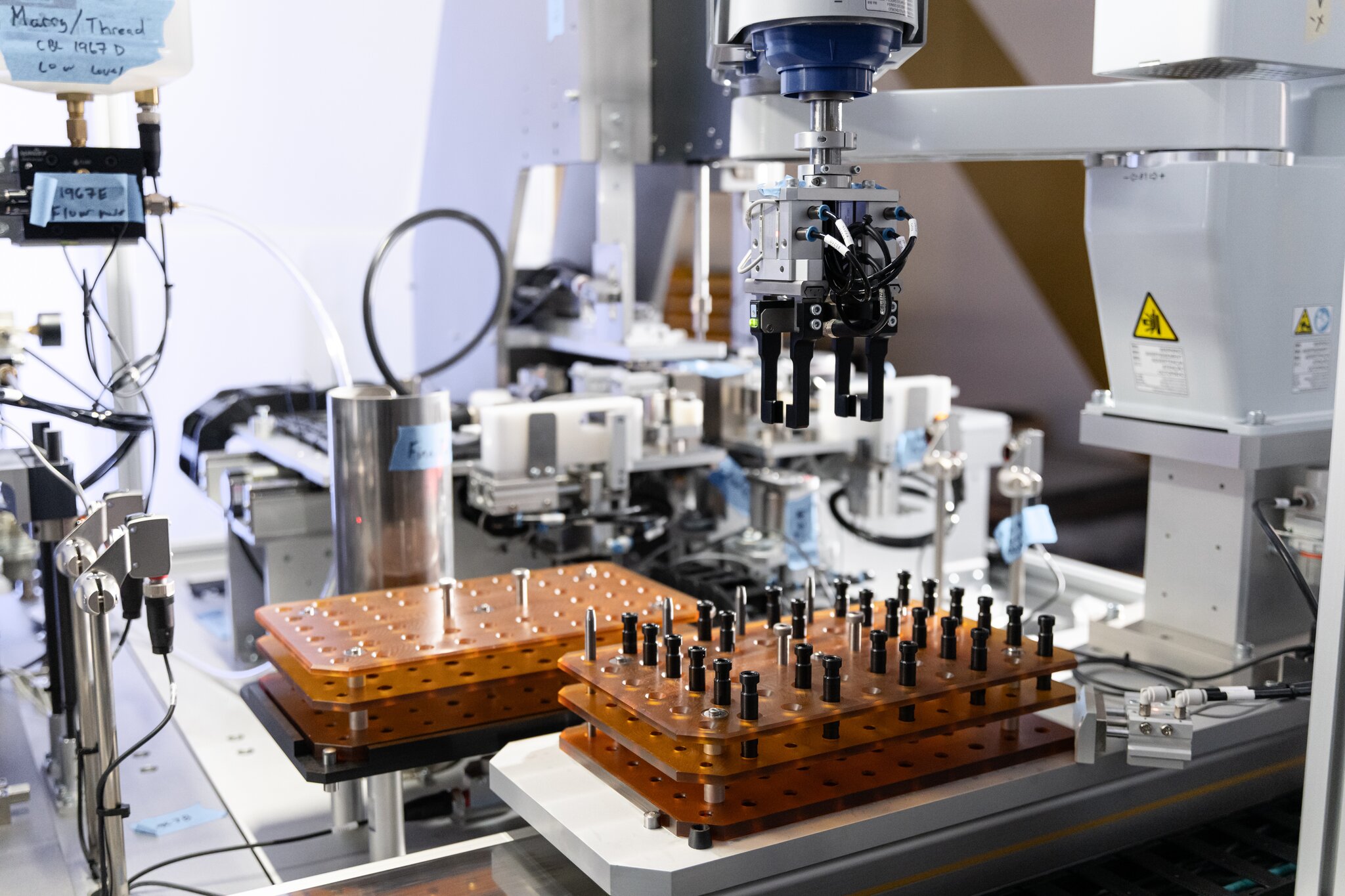
One recent project involved a well-known precision tool manufacturer with more than a century of experience producing highly accurate measurement instruments. At their primary facility, one of the most iconic components in their product line had been assembled by hand for generations. Skilled operators relied on years of experience and a refined sense of touch to achieve the smooth, high-accuracy movement that customers associate with premium measurement tools.
The company wanted to modernize this process while protecting the craftsmanship and quality that defined its brand. The goal was simple to describe yet incredibly difficult to execute: create an automated assembly system that could produce the same tactile precision that historically required human intuition.
Working closely with their engineering and operations teams, Re:Build DAPR developed a fully automated assembly cell that replicates this delicate, high-precision process.
This project demonstrated that even the most tactile and intuitive manual processes can be successfully automated when the right engineering expertise, sensing technology, and software intelligence come together.
The greatest challenge in automation is not technology. It is perspective.
Many manufacturers continue to believe that their processes are too customized or too dependent on human skill to automate. Yet the companies that thrive in today’s market are those willing to challenge that assumption. They recognize that automation is not about replacing people. It is about enabling their teams to focus on higher-value work, strengthening problem solving, improving quality oversight, and creating roles that are safer and more engaging.
When automation takes on the most repetitive, high-precision, or hazardous tasks, skilled employees can focus on continuous improvement, problem solving, and creativity. Automation enables people to do more of what they do best, and it allows organizations to build resilience against labor shortages and variability.
Re:Build DAPR helps manufacturers navigate this transition. We design systems that reflect how people think and work, so automation enhances operations rather than disrupting them. The result is a partnership that blends the best of both worlds: human expertise and machine precision.
If your company has a process that has always been done manually, this may be the time to look again. The tools and technologies now available can replicate, refine, and improve upon even the most skilled manual work.
With a clear understanding of your process and a willingness to innovate, automation can unlock higher productivity, better quality, and a stronger competitive edge.
Interested in how Re:Build DAPR and the Re:Build network can help you tackle your next automation challenge?
Contact us to start the conversation.
Looking to connect with an experienced team?
Look no further than Re:Build Optimation! We are excited to connect with you.
