
As battery technologies continue to advance, the processes used to inspect, test, and prepare individual cells play a growing role in overall production efficiency. Even small inefficiencies at the cell level can ripple through downstream operations, increasing build time and limiting scalability.
Re:Build DAPR designed and delivered an automated battery cell sorting and inspection system to address these challenges. Developed on an accelerated timeline, the system was initially created as a demonstration unit to showcase Re:Build’s automation, controls, and data capabilities in the battery manufacturing space. Following its debut, the system was engineered for reuse as a functional tool within internal battery development operations.
This blog outlines the design considerations, system architecture, and lessons learned from building an automated cell inspection platform under tight schedule and cost constraints.
In custom battery pack development, cell inspection is a critical but time-consuming step. For one internal battery development operation, nearly half of the total pack build time was spent inspecting individual lithium-ion cells. The process required operators to manually inspect, test, and handle cells before they could be assembled into packs.
The goal of this project was not to immediately deploy a full production solution, but to create a compact, visually engaging, and technically credible automated cell inspection system. The system needed to demonstrate how automation, vision, testing, and data integration could significantly reduce inspection time while maintaining safety and traceability.
At the same time, the project faced strict constraints. The system needed to be designed, built, tested, shipped, and installed in time for a major industry tradeshow, leaving just eight weeks from concept to completion.
The engineering team evaluated several layout concepts, including linear and conveyor-based designs. A rotary dial configuration was ultimately selected due to its compact footprint, visual clarity, and ability to reuse existing internal automation assets.
The final system was designed to function as a battery cell inspection station for cylindrical lithium-ion cells. An operator loads a tray of cells and initiates a one-button automated sequence. From there, a SCARA robot handles each cell individually, presenting it to a series of inspection and test stations.
Key process steps included:
While some process steps were simplified for schedule and cost reasons, the system was intentionally designed with a clear upgrade path for future functionality.
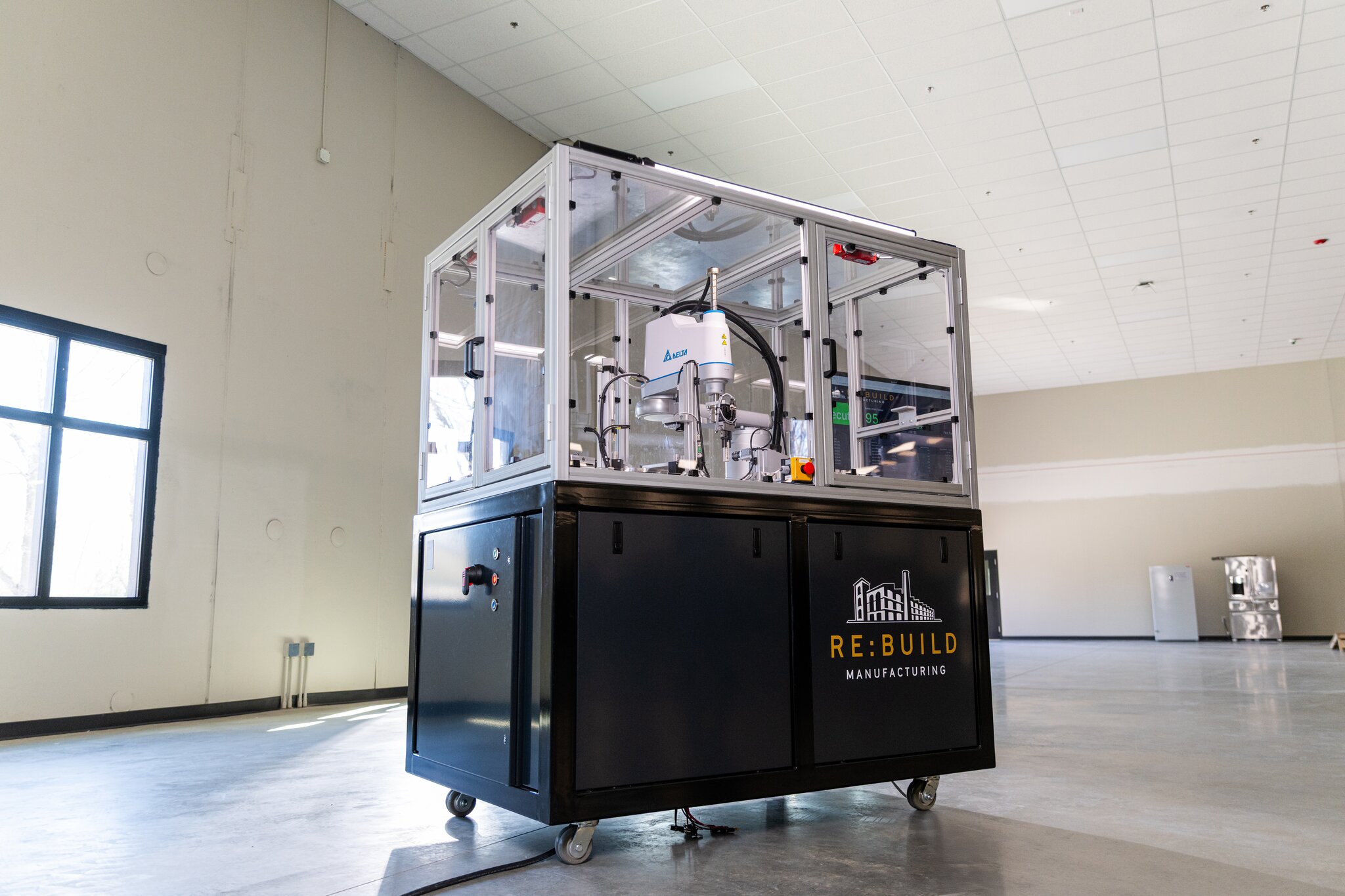
One of the defining characteristics of this project was the compressed schedule. Design activities were completed in roughly two weeks, with procurement and fabrication occurring in parallel. Long-lead items were identified early, and the team relied heavily on internal vendor relationships and component loans to keep the schedule intact.
To accelerate development, the team reused and repurposed components from existing internal automation projects, including robots, actuators, sensors, and safety hardware. This approach reduced lead times and allowed controls development to begin before the final mechanical build was complete.
Additive manufacturing also played a critical role. Many custom components, including grippers and cell arrays, were 3D printed to enable rapid iteration and proof of concept testing. Material choices were selected to balance rigidity, compliance, and shipping durability.
As with many fast-moving automation projects, unexpected challenges emerged during integration.
Limited access to pneumatics required all motion to be electrically actuated, increasing cost and tightening component availability. A firmware update issue rendered one robot unusable late in the project, forcing the team to pivot to a different robot platform with minimal schedule impact. Shipping and onsite setup constraints required the system to be fully self-contained, easily uncrated, and operable with minimal tools and personnel.
Each of these challenges was addressed through practical engineering decisions, cross-functional collaboration, and a willingness to adapt designs late in the build while protecting core functionality.
Beyond motion and mechanics, the system was designed to highlight Re:Build’s ability to integrate automation with data and analytics. The cell sorter leveraged an industrial PC, PLC control, cameras, and electrical test equipment to collect and aggregate inspection data in real time.
Test results, inspection images, and throughput metrics were logged and displayed through an analytics platform accessible from the system’s onboard monitor or remotely over the network. This architecture demonstrated how automation systems can provide immediate visibility into quality, yield, and process performance rather than functioning as isolated machines.
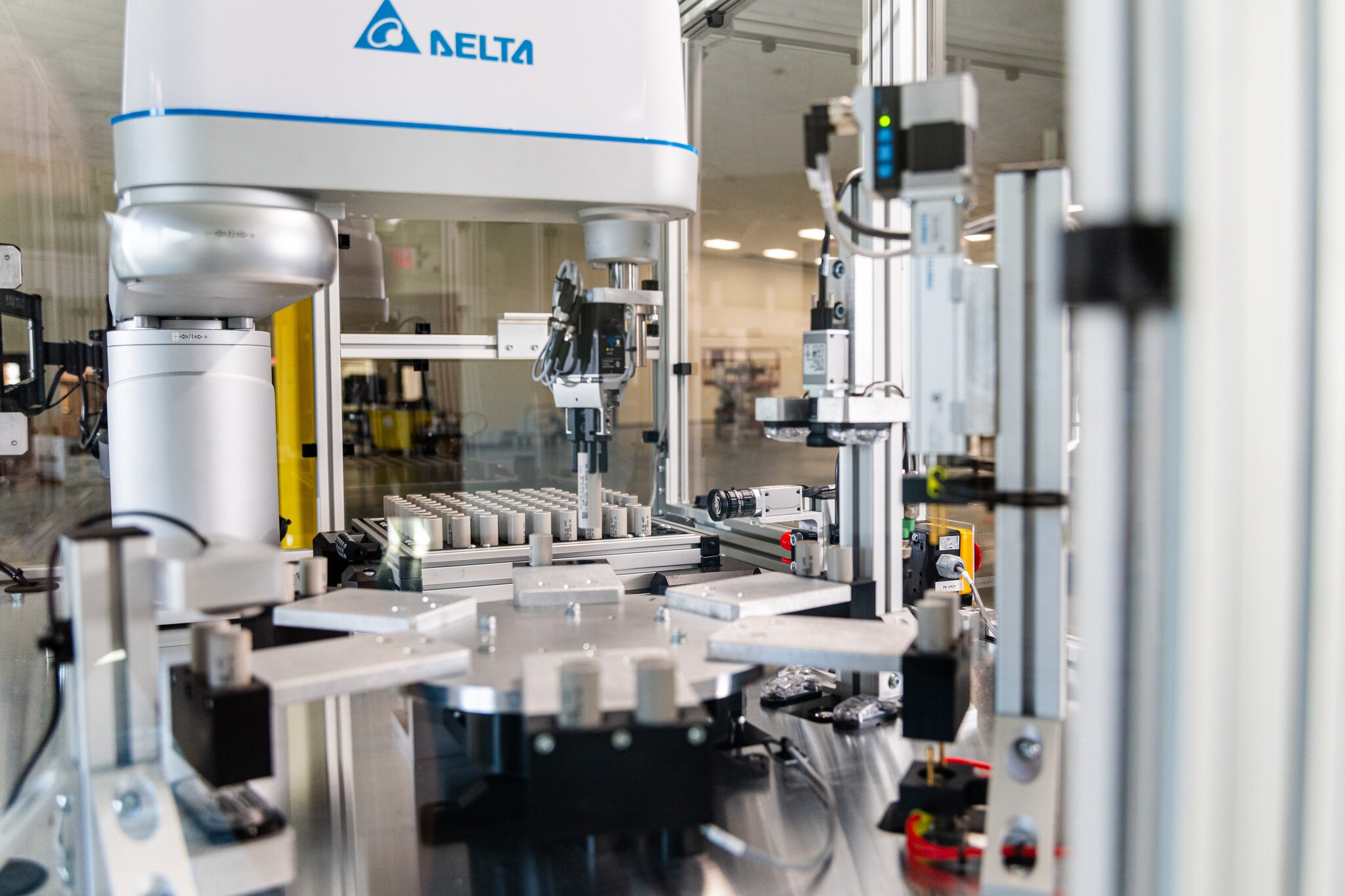
The automated cell sorter was completed on schedule, shipped successfully, and operated reliably throughout the tradeshow event. Following the show, the system was returned for continued use in internal battery development operations.
Planned and expected benefits include:
What began as a demonstration unit evolved into a practical automation asset with clear operational value.
This project reinforced several important principles for automation development:
Most importantly, the project showed how automation can be applied incrementally, starting with focused bottlenecks and expanding as needs evolve.
Automated inspection and testing will continue to play a critical role in scaling battery manufacturing. By combining robotics, vision, electrical testing, and data analytics into a compact and flexible platform, Re:Build DAPR demonstrated how thoughtful system design can deliver both immediate impact and long-term value.
For manufacturers seeking faster, more reliable battery inspection, this automated battery cell sorter reflects Re:Build DAPR’s approach to building practical, scalable automation systems that solve real manufacturing challenges.
If your team is exploring automation for battery manufacturing, inspection, or testing, we welcome the opportunity to collaborate and share lessons learned.
Looking to connect with an experienced team?
Look no further than Re:Build Optimation! We are excited to connect with you.
