
As electric vehicle technologies continue to evolve, the manufacturing systems that support them must keep pace. Battery assembly lines, in particular, introduce unique challenges. High-voltage components, heavy subassemblies, and tight takt time requirements demand careful coordination between safety, ergonomics, and throughput.
Re:Build DAPR partnered with an electric vehicle manufacturer to apply Lean’s 3P to the early design of a new battery assembly line. The goal was to reduce downstream risk, improve line balance, and ensure the final equipment design could scale reliably into production.
This blog outlines how 3P was used as a structured framework to evaluate alternatives, validate assumptions, and design a more robust manufacturing system before equipment was finalized.
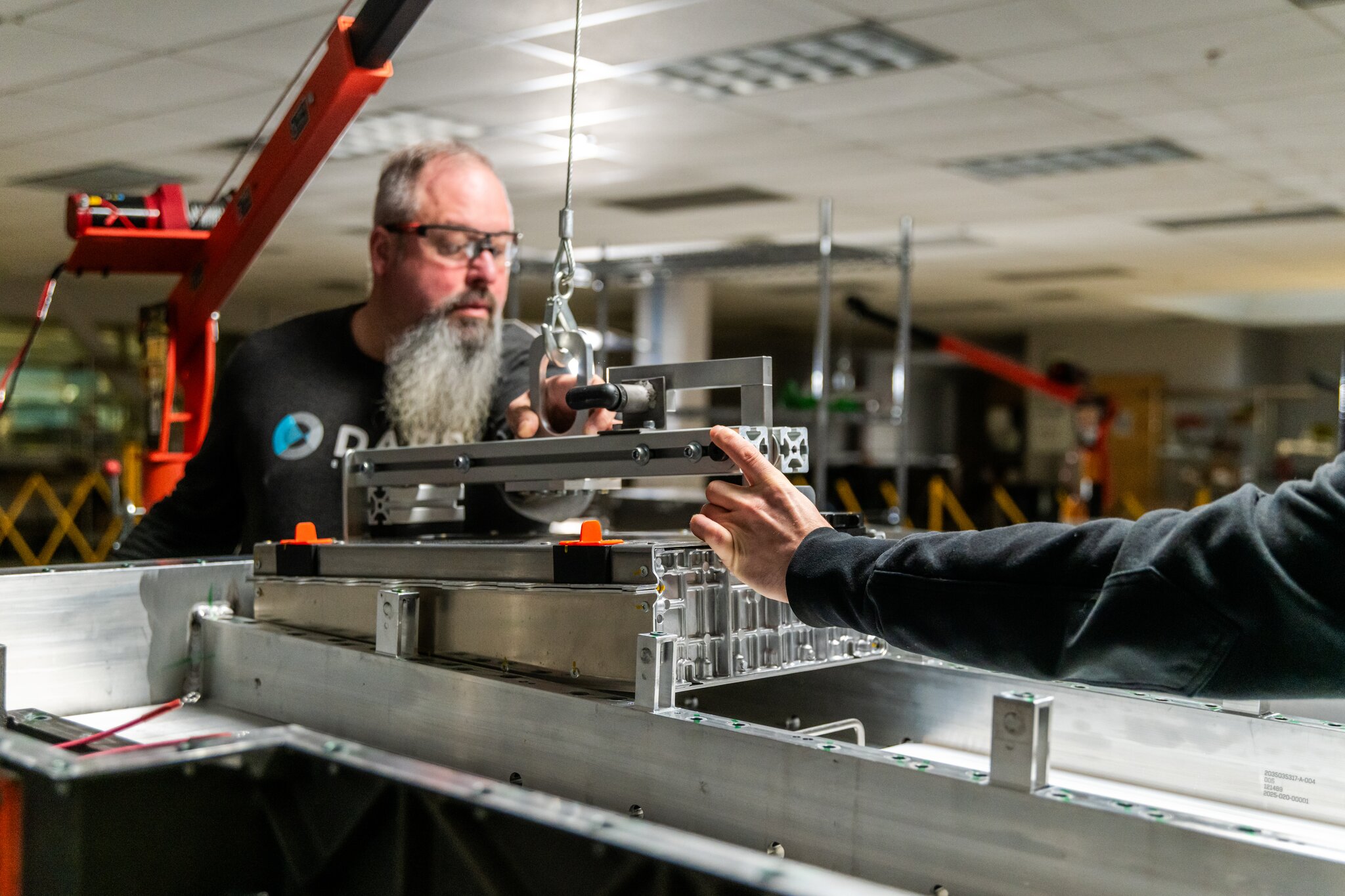
Traditional equipment design often locks in decisions too early. Once layouts are finalized and components are ordered, opportunities to improve ergonomics, flow, or safety become expensive and disruptive.
In this case, the assembly process involved heavy components, multiple manual operations, and aggressive takt time targets. Early concepts revealed risks related to operator burden, station imbalance, and material handling. Rather than optimize after installation, the team chose to use 3P to surface and address these issues upstream.
The 3P approach created space to explore multiple concepts quickly, align stakeholders, and converge on solutions grounded in real-world constraints.
The first phase of the effort focused on building a shared understanding of the process requirements and desired outcomes. The team defined the target takt time and mapped the high-level assembly sequence from start to finish.
Using current and target state thinking, the team identified where work content exceeded takt time, where duplication existed across stations, and where operator motion and material flow introduced inefficiency. Fishbone and gap analyses helped isolate root causes tied to design assumptions, task sequencing, and equipment layout.
This early analysis set the foundation for more detailed exploration and experimentation.
With the problem space defined, the team moved into hands-on evaluation. A core principle of 3P is learning by doing, and this project relied heavily on physical mockups and simulated workflows.
Key activities included:
These exercises allowed the team to compare options side by side and understand tradeoffs between ergonomics, cycle time, cost, and feasibility. Importantly, they enabled design discussions grounded in observation rather than assumption.
Rather than selecting a single concept and refining it incrementally, the team used rapid experiments to test and refine multiple ideas in parallel. Short simulation cycles and video walkthroughs made it possible to quickly assess how changes affected motion, timing, and safety.
Several improvements emerged from this process:
Because these experiments occurred before equipment procurement, design changes could be made with minimal cost and disruption.
Applying 3P early in the equipment design phase led to meaningful improvements before the line was built.
Key outcomes included:
By addressing risks upfront, the team avoided late-stage redesigns and improved overall readiness for production.
Several lessons from this project reinforce why 3P is such a powerful tool for complex manufacturing systems:
Most importantly, the project demonstrated that equipment design is not just a technical exercise. It is a cross-functional problem that benefits from structured Lean thinking.
At Re:Build DAPR, Lean is embedded in how systems are designed, built, and improved. The 3P process used in this project reflects a broader commitment to reducing risk, improving flow, and delivering manufacturing solutions that work in the real world.
By applying Lean principles early, Re:Build DAPR helps customers move from concept to production with greater confidence, fewer surprises, and systems built to scale.
For advanced manufacturing programs, the biggest risks often appear after equipment is installed. 3P offers a way to shift learning earlier, when changes are easier and less costly.
This battery assembly line project demonstrates how the 3P methodology can be applied beyond factory layout exercises and used as a practical tool for equipment design. The result is a safer, more efficient, and more scalable manufacturing system built on informed decisions rather than assumptions.
If your team is preparing to design or scale a complex manufacturing process, Re:Build DAPR is always open to sharing lessons learned and exploring how Lean can be applied to your next challenge.
Looking to connect with an experienced team?
Look no further than Re:Build Optimation! We are excited to connect with you.
